

[This report was originally published by Harrison Berger at Dragnet]
Over the past seven months, Israeli officials have been open about their plans to ethnically cleanse southern Lebanon. Israel’s “defense” minister Israel Katz declared on March 16, 2026, that “hundreds of thousands of Shiite residents of southern Lebanon […] will not return to their homes south of the Litani area until the safety of Israel’s northern residents is guaranteed.” PBS News would report months later how Israel’s “campaign has inflicted unprecedented devastation on those Shia communities” while “in stark contrast, Christian villages like Marjayoun have been left largely intact.” The New York Times reported in April on “private calls to local leaders across southern Lebanon” in which Israeli military officials “assured several Christian and Druse communities that they could remain in the evacuation zone” but “pressed them, however, to force out any Lebanese from neighboring Shiite Muslim communities who have sought refuge among them.” Shiites, the Times noted, “make up the majority of southern Lebanon.”
In a March 22 post on X, Israel Katz stated that he and Prime Minister Benjamin Netanyahu ordered Israel’s occupation forces “to accelerate the destruction of Lebanese homes in the border villages” in accordance with what he called the “model in Gaza.” Israel’s Finance Minister Bezalel Smotrich likewise said that “the southern suburbs (of Beirut) will become like Khan Younis.” Israel’s National Security Minister Itamar Ben Gvir — in a June 19 post censored by X for violations of the website’s content policies — declared that “For every tear of an Israeli mother, a thousand Lebanese mothers must weep. All of Lebanon must burn!” A community note displayed beneath the censored post asserts that “this is an incitement to commit genocide, which is a crime against humanity, according to the Genocide Convention.”
The Israeli “opposition” is just as committed to the destruction of southern Lebanon; Opposition leader Yair Lapid called for a “sterile zone” in southern Lebanon, “an area with no Lebanese villages in it – a completely clean strip between the last Lebanese and the first Israeli community,” while acknowledging “it may be unaesthetic, unpleasant to scrape away two or three Lebanese villages,” but it would be necessary anyway. Gadi Eisenkot, heralded by Western corporate media as an “anti-Netanyahu,” who can “offer Israel a new chance” declared on March 11 that “the Dahiya Doctrine” — the strategy designed by Eisenkot during Israel’s 2006 War on Lebanon in which disproportionate force is deployed against civilian infrastructure —“has never been more relevant than it is now, and it must be implemented.” The Trump administration’s response to Israel’s open, societal-wide desire to ethnically cleanse southern Lebanon has been to help them do it, planning to hand the Israeli government shipments of 2,000-pound bombs to achieve that objective. Each bomb, journalist Tucker Carlson explained, “has a destruction radius of half a mile. It releases a thermal wave the temperature of the surface of the sun. Within 100 feet of the explosion, rock melts and human flesh turns to vapor. The bomb collapses apartment buildings and leaves craters thirty-five feet deep.” The shipment of 40,000 new bombs, financed by U.S. taxpayers, will be used in Lebanon, Carlson added.
Like the Gaza genocide, the ethnic cleansing of southern Lebanon would not be possible without the complete financial and diplomatic backing of Israel’s chief sponsor and paymaster, the United States government. It is a team effort, which has been assisted too by corporate media, who are reliably subservient to the war narratives disseminated by officials in Tel Aviv and Washington and often opt for a “both sides” framing. Outlets helpfully frame Israel’s methodical ethnic cleansing operation as a war between Hezbollah and Israel, treating the mass destruction of homes and the displacement of over a million people as incidental rather than as the intended objectives of Israel’s campaign.
Residents of southern Lebanon, however, describe a different kind of “war,” one that is eerily similar to Israel’s genocide in Gaza. It is instructive to hear their testimonies; Americans forced to foot the bill for their ethnic cleansing have a moral obligation to listen.
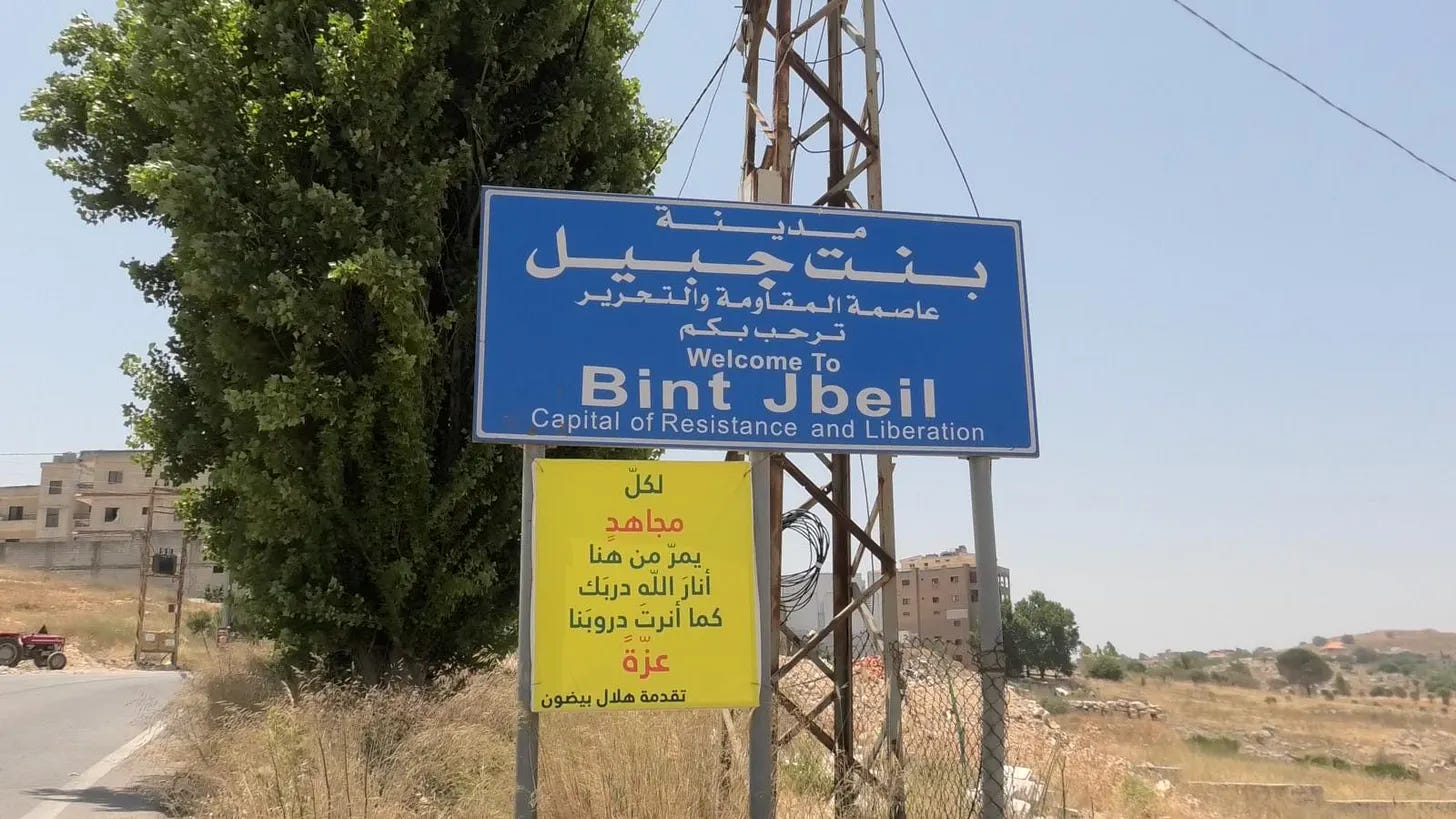
Mohamad Kleit, a journalist originally from Bint Jbeil, told Dragnet how his village has been almost entirely destroyed by Israel’s occupation forces.
“During the ceasefire, they took control of the town and they have carried out demolitions since March,” Kleit says. The Lebanese government, which in June signed a “ceasefire” deal with the U.S. State Department and Israel, “doesn’t do anything” about it. “They just denounce it.” As I talk with him on the phone, Kleit informs me that the Israeli occupation forces “just blew up another house.” His job has become increasingly dangerous. “The [Israelis] have thrown stun grenades at me,” Kleit says. “We see the soldiers moving around in tanks, driving ATVs on hilltops, as excavators destroy houses.”
Jana Bazzi, a resident of Bint Jbeil, told us that the destruction of her city “did not happen all at once.” Bint Jbeil had been under Israeli attack since 2023, but the scale of the destruction “expanded dramatically in March 2026,” Bazzi said, adding that “from that point on, the attacks increasingly involved demolition, bulldozing, booby-trapping, and the blowing up of buildings.”
According to the Bint Jbeil municipality, more than 80 percent of the city’s built-up area has been completely destroyed, including more than 2,000 buildings the municipality estimates contained at least 5,000 residential units. The municipality documented the complete destruction of 11 of the city’s 14 educational institutions and more than 500 shops, with roughly 200 more partially damaged. Among the buildings destroyed was the Great Mosque of Bint Jbeil, which stood for more than 400 years and was, Bazzi said, “part of the old center and the collective memory of generations of people from Bint Jbeil.”
“When we receive new aerial maps or satellite images of Bint Jbeil, there are moments when we struggle to recognize entire neighborhoods,” Bazzi said, adding that “places we have known our whole lives have changed so dramatically that it can be difficult to understand what we are looking at.”
Bazzi described what has happened to her city as an “urban genocide” that “expanded significantly after what is being called the ceasefire,” stating that “the urbicide of Bint Jbeil actually intensified after the so-called ceasefire.” Bint Jbeil is located within what Israel calls the “Yellow Line,” a zone where residents are barred from returning.
“We have reached a point where we find ourselves wishing for something as basic as being able to go back to our own town, to stand on our own land, to walk through our own streets. And we cannot,” Bazzi said. “For us, the word ‘ceasefire’ has very little meaning when the bombing, destruction and occupation continue, and when people are still prevented from going home.”
The Israeli fixation with Bint Jbeil stems from a speech presented in 2000 at Bint Jbeil stadium and later, the town’s successful defense against Israeli invaders during the 2006 war, both humiliating for the IDF and Israeli society.
When Israel disengaged from its 22-year long occupation of Lebanon in 2000 and retreated to what the UN called the “Blue Line,” then-General Secretary of Hezbollah Hassan Nasrallah gave a victory speech in Bint Jbeil which haunted Israeli society for more than two decades. Known as the “Spider-Web speech,” Nasrallah declared that “This Israel, with its nuclear weapons and most advanced warplanes in the region, I swear by Allah, is actually weaker than a spider’s web... Israeli society is war-weary and lacks the resilience to endure a bloody conflict or suffer casualties. Israel may appear strong from the outside, but it’s easily destroyed and defeated.” The speech, delivered at the Bint Jbeil stadium to an estimated crowd of 100,000 people, exposed the fragility of Israel’s occupation forces and infuriated Israel’s military establishment.
The 2006 Israeli invasion of Lebanon, carried out under the pretext of rescuing a handful of Israeli soldiers captured by Hezbollah, was primarily motivated by Israel’s desire to shake off its “Spider Web complex.” Haaretz’s Doron Rosenblum wrote at the time that “This war, with all its hundreds of casualties and tremendous damage, broke out not because of the abduction of the soldiers, but because of a speech: Hassan Nasrallah’s short, bragging speech in which he provoked Israel’s new leaders.” Israel’s lobby group WINEP likewise wrote of the 2006 invasion of Lebanon that “many Israeli generals such as IDF Chief of Staff Moshe Yaalon would cite Nasrallah’s “spider web” speech as suggesting that Israel had lost its deterrent as Arabs no longer feared Israel’s military might. Israel’s current fighting can be seen as seeking to restore that deterrent.” And Bint Jbeil, the site of Nasrallah’s speech, would become what Israel’s Chief of the General Staff Dan Halutz in 2006 called a “symbol” of the resistance. “Nasrallah spoke there. And I would think that in his next speech - if there is a next speech - he will think carefully about his words.” Yet even though Israel three times attempted to seize control of Bint Jbeil in 2006, Hezbollah ultimately defeated the Israeli invaders, resulting in yet another humiliation for the apartheid state. Israeli soldiers described the Hezbollah defensive as “hell on earth,” with at least 17 IDF soldiers killed.
In April 2026, Israel’s occupation forces captured Bint Jbeil and destroyed the stadium where Nasrallah delivered his haunting speech. “Bint Jbeil 2000: Someone here spoke and boasted about webs and spiders,” Israeli Brig. Gen. Guy Levy told his occupying troops. “Today, that man no longer exists, the stadium is gone, and his words are worth nothing.”
In October, 2026, Bint Jbeil is almost totally destroyed. But like Nasrallah’s 2000 speech, the memory of the city will live on as a symbol of resistance. Jana Bazzi and her close relative Malak Bazzi explained to Dragnet why.
Jana Bazzi, Lebanese Journalist
“Ever since I was a child, I was used to spending my summers in the south. I would spend the summer holidays between my hometown, Bint Jbeil, and my mother’s village, Kounine, which is right next to it.
Going to the village was always one of the happiest things in the world for me. I still remember school holidays, when we would prepare everything the night before, wake up extremely early and leave Beirut around five in the morning. We would arrive at around seven, and my grandfather would already be sitting outside the house. There would still be dew on the ground from the cold of the night.
Every time I arrived, I had this feeling that I could finally breathe again. Beirut always made me feel a little suffocated, and once I reached the village, something inside me relaxed. That feeling never changed as I grew older.
Even after I started working, I would still leave Beirut very early on weekends just to spend time there. I could drive for two hours and barely feel the distance because I was so happy to be going back to the place where I felt I belonged. I never had my own house there. I would stay at my grandfather’s house, and later we sometimes rented a place. But it still felt like home.
Driving south always felt like I was heading somewhere peaceful, almost like heaven to me. The drive back to Beirut was the opposite. I would feel that I was returning to the noise, the traffic and the pressure of the city.
Then the war started on October 8, 2023. At first, I thought maybe it would last for a month or two and then end. Unfortunately, it never really ended. Every day, the situation became worse.
I gradually stopped going to the village because I no longer felt safe there. There was another reason too. My grandfather had died in August 2023, only a short time before the war began. After he died, I already found it difficult to imagine going back and seeing the village without him. Then the war made that feeling even heavier.
Today, I feel like I cannot breathe properly because the place that used to give me the greatest sense of peace and safety has become a place I cannot reach.
Sometimes I try to escape from the reality that Bint Jbeil has been destroyed, and that Kounine has also been devastated. Roads, houses and places that I knew by heart, places that were part of my memories and my life, have disappeared or changed so much that I can barely recognize them.
It reached a point where I stopped looking at aerial images of Bint Jbeil. I started asking my friends not to send me photographs of the destruction. Part of me simply does not want to believe that so much of what I knew is gone.
Sometimes I wish I could go back to the time before October 8, 2023, stop time there, and simply live in the village.
For years, one of my dreams was to build a house there in a traditional Lebanese architectural style, surround it with trees and greenery, and have my family live there. It was such a simple dream, and now even that feels very far away.
Personally, I do not have much hope that I will be able to return to Bint Jbeil anytime soon. Sometimes I feel that I have lost my sense of safety everywhere in Lebanon, not only in the south. And when I look at everything happening around us, I do not see many signs that a real return is close.
I just hope I live long enough to see Bint Jbeil free again, full of people, full of life, with its families back in its streets.
There is one thing I still believe very strongly: no matter how many years it takes, people return to their land. This is something we, as people from the south, deeply believe in. We may be displaced, and we may be kept away for years, but our relationship with the land does not disappear.”
Malak Bazzi, Social statistics researcher, PhD
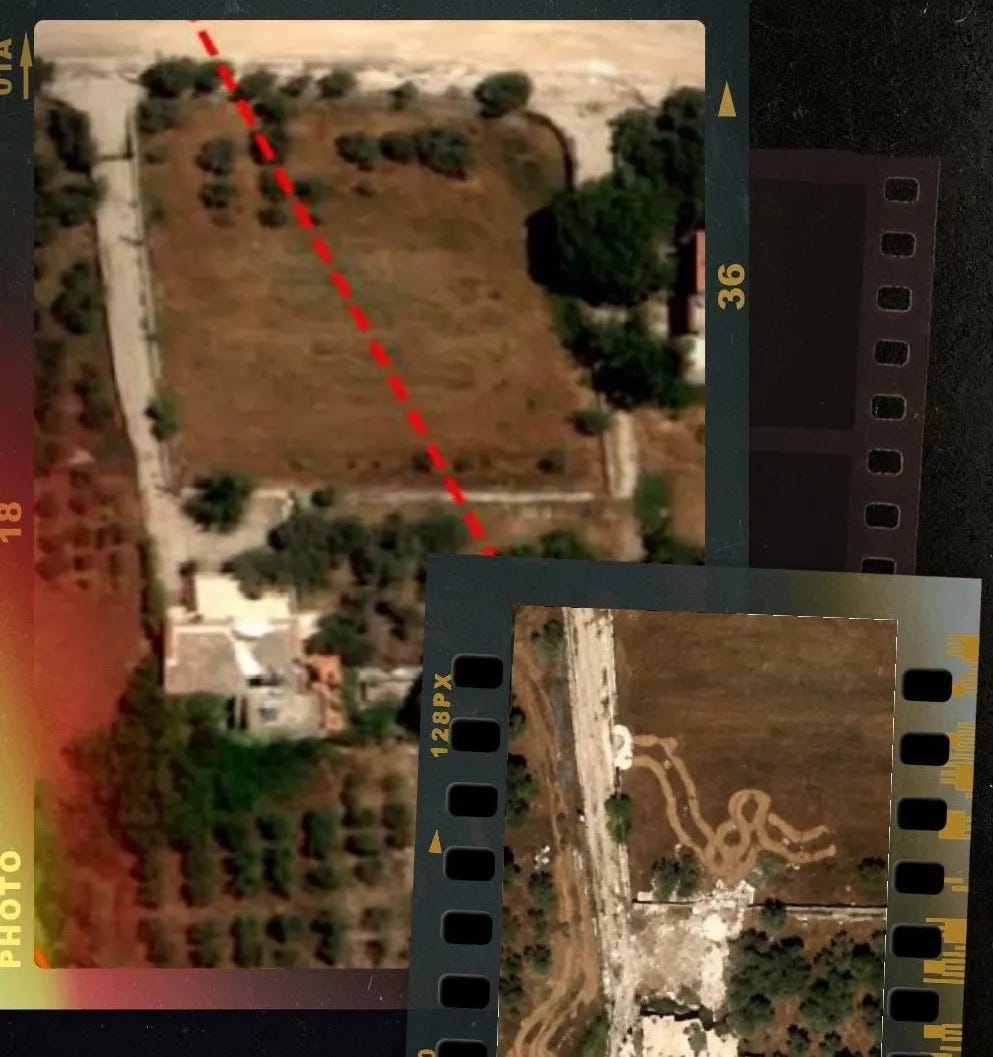
“I am from Bint Jbeil. I have seen my town occupied and destroyed three times since 2006, but nothing compares to what is happening now. This time the destruction is near-total: homes, schools, hospitals, the university, every institution. And it has not stopped.
I saw my family home through aerial images. That is how we see our homes now, from a satellite, like strangers. I zoomed in on the screen looking for walls, for the courtyard, for the stairs I ran down as a child. There was only a grey pile of rubble.
It was a beautiful house. We built our life around it. In the backyard there was a pool where summers were spent laughing, and a treehouse among the branches, a small kingdom for children, where I hid, dreamed, and later watched younger ones climb up just as I once did. Evenings in that garden were the heart of our family: gatherings, long conversations, the sound of the south at dusk. It was not luxury. It was peace, the kind of peace you only realize you had once it’s gone.
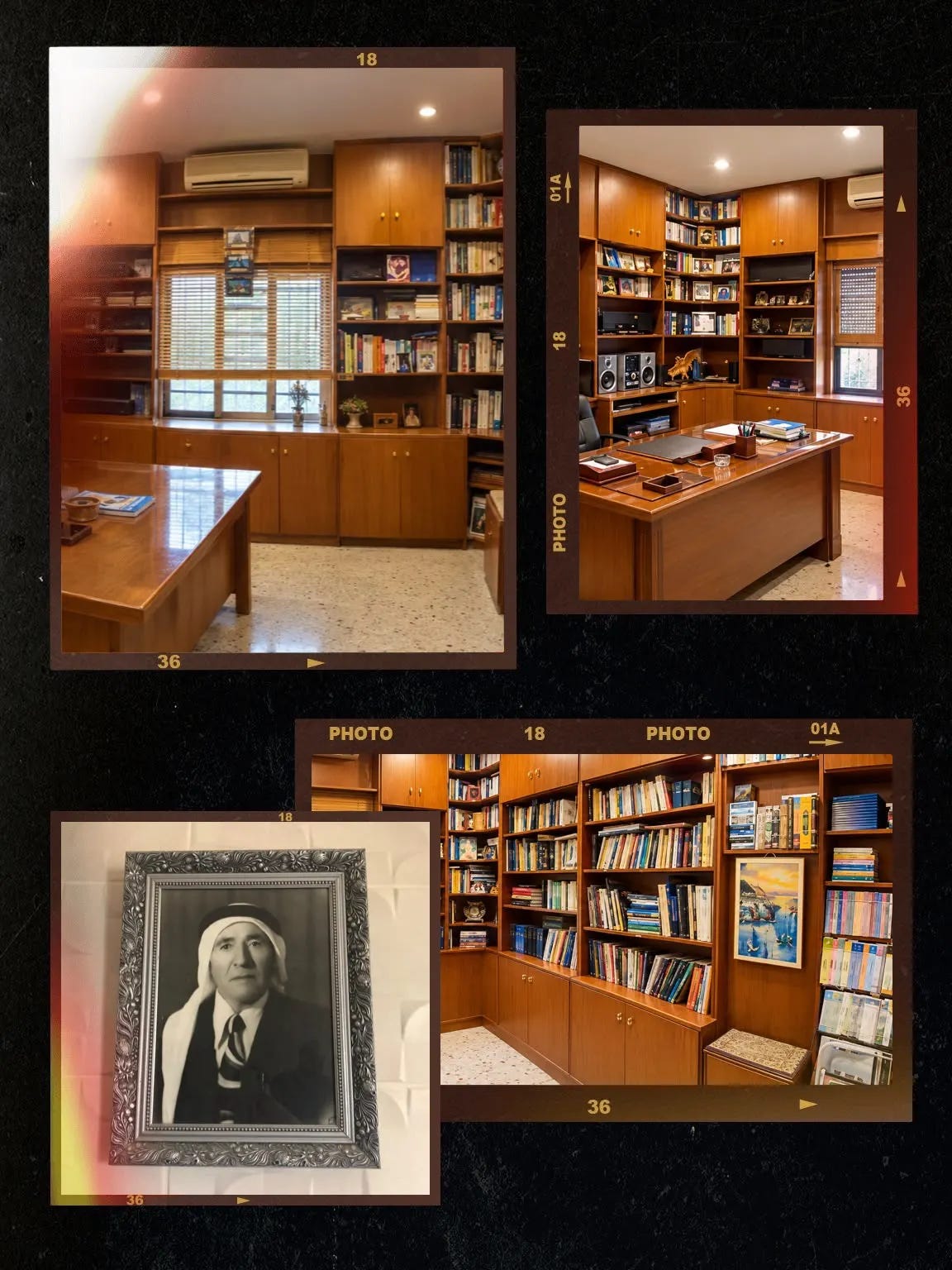
People think of a house as stones. Ours was much more than that. It held a library of around 10,000 books, gathered over generations. It was a room where I grew up reading, where my family’s mind and history lived on shelves. Those books cannot be bought again. Many were rare, many were annotated by people who are no longer with us.
The house also held the memory of my grandfather, who once served as mayor of Bint Jbeil “Al Mokhtar”. With him came documents and registries of the town’s citizens, records of families, names, births, and lives. Losing them is not only a personal loss. It is a piece of the town’s collective memory erased, part of the proof of who lived here and how.
And my loss is only one among countless others. The people of Bint Jbeil, and of the entire south, are now scattered across the country, sheltering in schools, in the homes of relatives, in rented rooms, wherever they can find a roof. Families that lived side by side for generations are separated from one end of Lebanon to the other. Many young people have given up and are leaving the country altogether, searching for a future elsewhere. It is not only houses being destroyed. It is the fabric of our communities, our neighborhoods, our way of life, torn apart and dispersed.
What hurts most is the helplessness. I cannot go there. I cannot search the rubble for one book, one document, one photograph. I grieve from a distance, through a screen.
But I want to say this clearly: they destroyed a building, not our belonging. Bint Jbeil has risen before. The memory of that house, of my grandfather, of those books, lives in us. We will return, and we will rebuild, as we always have.”
[This report was originally published by Harrison Berger at Dragnet]